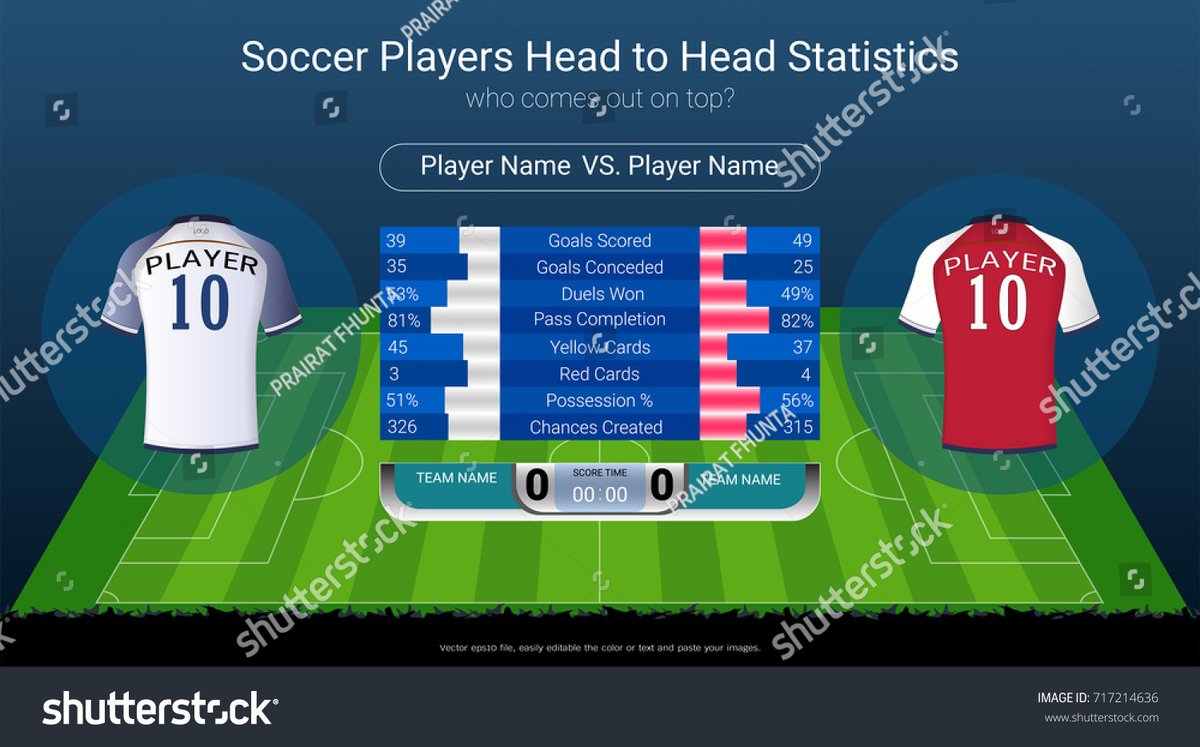
Step onto any football pitch, and you're not just watching 22 players; you're witnessing the latest chapter in a long, storied book. Every pass, tackle, and goal is influenced not only by the present but by the echoes of past encounters. This historical narrative, meticulously captured in Head-to-Head Statistics, is a powerful lens through which professional bettors and savvy analysts make their sharpest predictions and truly grasp the depth of a rivalry. It's more than just who won last time; it's a deep dive into how two teams consistently interact, a data-driven blueprint for potential future outcomes.
This isn't about guesswork. It's about empowering your analysis with concrete evidence, transforming hunches into calculated forecasts. Let's unpack how to use these invaluable insights to gain a significant edge.
At a Glance: Your H2H Toolkit
- What it is: Historical data detailing past performances between two specific teams.
- Why it's vital: Identifies betting opportunities, strengthens predictions, and reveals underlying match dynamics.
- Core data points: Matches played, wins/draws/losses for each team, goals scored/conceded, home/away splits, and recent results.
- Key analysis areas: Overall match history, recent form in H2H, and venue-specific performance.
- Markets it influences: Match Result, Double Chance, Correct Score, Over/Under Goals, Both Teams to Score (BTTS).
- Common pitfalls: Relying on outdated data, ignoring injuries/suspensions, overemphasizing small sample sizes.
- Best practice: Always combine H2H stats with current team form, league standings, player news, and motivational factors.
The Core of Head-to-Head Statistics: Beyond Just Wins and Losses
At its heart, head-to-head (H2H) football statistics are a direct report card from history. They catalog every time two specific teams have faced each other, offering a unique narrative that can be more insightful than looking at each team in isolation. Think of it as a detailed relationship history: some teams always bring out the best in their opponents, others struggle against specific playstyles, and some just seem to have a psychological advantage.
For professional bettors and analysts, H2H data isn't just trivia; it's a bedrock for identifying lucrative betting opportunities and making genuinely accurate predictions. It answers critical questions that broader statistics can't:
- How often do these two teams score against each other?
- Are their playing styles historically similar, leading to predictable outcomes?
- Is a draw a common result when they meet?
- Who typically dominates, and under what circumstances?
More data generally leads to more reliable insights. By meticulously examining H2H, you move beyond mere sentiment to a statistically backed understanding of potential match dynamics.
What Makes Up Core H2H Data?
To properly leverage head-to-head, you need to understand its fundamental building blocks. These are the raw materials from which predictive power is forged:
- Number of Matches Played: A larger sample size generally provides more reliable insights, though recent matches are often more relevant.
- Team Wins, Draws, and Losses: The most basic measure of dominance. Who has the better record? How often do they share the spoils?
- Goals Scored and Conceded: Reveals attacking prowess and defensive vulnerabilities in direct confrontations. Is one team consistently shutting the other out, or are their games often high-scoring affairs?
- Home and Away Performance: Crucial context. Does one team consistently struggle at a particular opponent's stadium, or do they thrive on the road in this specific fixture?
- Results of the Most Recent Matches: This is often the most critical subset. How have the last few encounters played out? Trends here can signal current power dynamics.
By systematically compiling and comparing these data points, you begin to see patterns emerge that can significantly strengthen your bet chances.
Decoding the Rivalry: What H2H Reveals About Matchups
Beyond just raw numbers, H2H statistics allow you to dissect the unique dynamic between two teams. It’s about understanding the specific nature of their rivalry, whether it’s a fierce derby or a less glamorous but tactically fascinating encounter.
Historical Match History: The Long View
Every match adds to a team's legacy against a specific opponent. Looking at the total history between two clubs offers several immediate insights:
- Total Matchups: The sheer volume of games tells you how deep the rivalry runs and how much data you have to work with.
- Historically Dominant Team: Is there one team that has consistently had the upper hand over decades? This historical dominance can breed psychological confidence for the stronger side and, conversely, a mental block for the weaker one. This isn't always predictive of a single match outcome, but it's a vital part of the narrative.
- Draw Frequency: Some matchups are inherently tighter, with teams often canceling each other out. A high frequency of draws in the historical record might point towards another stalemate, especially if current form suggests an evenly matched contest.
This long-term perspective provides the foundational story, but football evolves quickly.
Recent Head-to-Head Matches: The Current Pulse
While a long history offers context, recent H2H matches are often a more accurate barometer for future performance. Football tactics, players, and managers change constantly, making older data less relevant to the immediate future.
- Analyze the Last 3-5 Matches: Focus intensely on these recent encounters. What were the individual scores? Who scored? Were there red cards or contentious decisions?
- Recent Performance Trends: Are there emerging patterns? Has a historically dominant team started to falter against their rival? Or has an underdog begun to consistently challenge or even defeat their perennial superior? These shifts in recent trends are often better indicators of future performance than older historical data, yet they are frequently underutilized by bettors who only glance at the overall H2H record.
Prioritizing the immediate past ensures your analysis is grounded in the most current understanding of how these teams perform against each other.
H2H Performance Records by Venue: The Home Advantage Equation
The roar of the crowd, the familiarity of the pitch, the comfort of their own locker room—home advantage is real in football. H2H data allows you to isolate this factor, revealing specific venue-based tendencies.
- Home Wins vs. Away Losses: How does each team perform when hosting their rival, and when traveling to their rival's ground? Some teams are formidable at home but crumble away, or vice-versa.
- Venue-Based Goal Distribution: Do games at one specific stadium tend to be high-scoring, while games at the other are cagey, low-scoring affairs?
- Shutouts: How often does a team manage to keep a clean sheet against their rival, particularly at home or away?
This granular data is incredibly valuable for specific betting markets like Match Result, Double Chance (e.g., Team A or Draw), and especially Correct Score wagers, where understanding specific scoring tendencies at particular venues can be the difference-maker.
Goals and Game Dynamics: H2H for Betting Markets
H2H statistics don't just tell you who wins; they tell you how the games typically unfold, especially concerning goals. This insight is gold for specialized betting markets.
Goal Over/Under Statistics: Unpacking the Net Result
For bettors focused on the total number of goals in a match, H2H provides a powerful historical baseline.
- Average Team Scores: What's the historical average number of goals each team scores and concedes when they play each other? This gives you a quick snapshot of their offensive and defensive capabilities in this specific matchup.
- Frequency of Matches Ending Above/Below Total Goals: How often do their games go Over 1.5, Over 2.5, or even Over 3.5 goals? Conversely, how often do they end up Under these totals? This helps you gauge the likelihood of a high-scoring thriller versus a tactical stalemate.
- Prevalence of One-Sided vs. Open Matches: Do these fixtures tend to be dominated by one team, resulting in multiple goals for them and few for the opponent? Or are they typically open, back-and-forth affairs where both teams find the net?
While this approach can be valid for goal-based markets, remember that current team form and tactical approaches also play a massive role. Relying solely on historical goal averages for an Over/Under bet can be risky if one or both teams have undergone significant changes.
Scoring Statistics (Both Teams to Score - BTTS): Attacking or Shutting Down?
The "Both Teams to Score" (BTTS) market is hugely popular, and H2H data is a prime tool for analyzing its likelihood.
- How Often Both Teams Score: Historically, what percentage of their matchups have seen both teams find the back of the net? A high percentage indicates a fixture where both sides are consistently able to break down the other's defense.
- How Consistently Defenses Stop Opponents: Conversely, how often does one or both teams keep a clean sheet against their rival? This highlights defensive strengths or offensive struggles in this specific confrontation.
- Match Intensity: Consistent BTTS results can often indicate an attacking matchup, suggesting two teams that prioritize going forward or struggle defensively against each other's specific style.
However, even with strong BTTS historical trends, it's crucial to consider current team performance, especially defensive solidity or a key striker's form. A team with a history of scoring against an opponent might struggle if their main goal threat is injured or out of form.
The Deeper Dive: Advanced H2H Analysis
Truly seasoned analysts go beyond the surface numbers. They understand that football isn't just about goals and wins; it's about the underlying philosophies and human elements that drive those outcomes.
Tactical Analysis: Clash of Philosophies
H2H statistics, when combined with careful observation, can reveal how specific playing philosophies interact. It’s not just about who won, but how they won.
- High-Press vs. Possessing Teams: Does one team thrive by suffocating their opponent with a high press, particularly against teams that like to build from the back? Or does a possession-oriented side consistently dismantle a team that sits deep?
- Counter-Attacking vs. Outright Attacking Teams: Are there instances where a counter-attacking side consistently frustrates and punishes an outright attacking team in H2H matchups? This can show how specific tactical blueprints contribute to dominance or struggle in this particular fixture.
Understanding these tactical leanings helps you predict not just the outcome, but the flow and style of the upcoming match.
Managerial Influence: The Guiding Hand
Coaches are the architects of a team's strategy, and their impact on H2H outcomes can be profound.
- Manager-versus-Manager Records: Some managers simply have an opponent's number, regardless of the teams they're coaching. Examining a manager's record against a specific rival coach can uncover a tactical advantage or a psychological edge.
- Tactical Adaptability: Has a manager shown a willingness to adapt their usual style when facing this particular opponent, often leading to different H2H outcomes?
- Stability vs. Shifts: A long-tenured manager often imprints a consistent style, making H2H trends more predictable. However, abrupt H2H changes—a dominant team suddenly struggling or vice-versa—can often be attributed directly to coaching influence, such as a new manager bringing a fresh tactical approach.
Always consider the managerial dynamic. A change in the dugout can instantly reset or redefine an existing H2H narrative.
Common Traps: Mistakes to Avoid When Using H2H Data
While powerful, H2H statistics are not foolproof. Many bettors fall into predictable traps that undermine the utility of this data. Being aware of these pitfalls is just as important as knowing how to use the stats themselves.
- Using Outdated H2H Statistics: As emphasized earlier, football evolves. A comprehensive H2H record from 15 years ago is far less relevant than the last 3-5 encounters. Teams change managers, players, and even entire philosophies. Don't be swayed by ancient history when recent trends tell a clearer story.
- Overlooking the Significance of Injuries and Suspensions: Even the most dominant H2H record can be shattered if a key player is missing. A star striker, an influential midfielder, or a commanding center-back can individually shift the balance of power, regardless of past H2H glory. Always check the team news.
- Unjustified Overreliance on Small Sample Sizes: If two teams have only played each other once or twice, that data, while "H2H," is statistically fragile. Two matches do not create a reliable pattern. Be wary of drawing strong conclusions from limited past encounters.
- Assuming an H2H Outcome is "A Given": No result in football is guaranteed. Even if Team A has beaten Team B ten times in a row, the eleventh match is still a new game. H2H provides probabilities and patterns, not certainties. The ball is round, and upsets happen.
A detailed match analysis, incorporating current form, player availability, and tactical approaches, should always complement H2H outcomes. Never let H2H stand alone as the sole basis for your prediction.
Synergizing Your Strategy: Combining H2H with Other Data Points
H2H statistics are a potent ingredient, but they're most powerful when mixed into a rich stew of other relevant data. Think of it as painting a full picture; H2H gives you the specific colors for how these two teams interact, but you need broader strokes for the overall context.
For the most advantageous and robust predictions, you absolutely must combine H2H stats with these crucial elements:
- The Current Form of the Teams Involved: How have both teams performed in their last 5-10 games, regardless of the opponent? A team might have a historically poor H2H record, but if they're currently on an unbeaten run, that changes the dynamic significantly.
- Their League Standings: A team fighting for a title will approach a game differently than one safe in mid-table or one battling relegation. Motivation is a powerful, unquantifiable factor.
- Player News (Injuries, Suspensions): We can't stress this enough. The absence of a key player can alter a team's capabilities and confidence profoundly. Always check for confirmed injuries, doubtful players, and suspensions.
- Motivating Factors: Beyond league standings, consider the broader context. Is it a cup tie with a chance for silverware? A relegation battle where points are paramount? A derby match where pride is everything? These factors can push teams to exceed their usual performance levels.
For example, when preparing a wager on a critical South American qualifier, you wouldn't just look at past scores; a Comprehensive Ecuador vs Chile guide would layer H2H with current form, squad news, and political stakes to paint a full picture. This holistic approach builds resilience into your predictions, accounting for the dynamic nature of football.
When H2H Shines Brightest (and When It Dims)
Knowing when to lean heavily on H2H data is just as important as knowing how to analyze it. It's a tool with specific strengths and weaknesses.
Most Effective Uses for H2H Analysis:
- Rivalry Matches: These games often defy current form. The history, the psychological baggage, and the sheer desire to beat that specific opponent make H2H statistics particularly telling. Past results in these fixtures are often highly indicative.
- Balanced Matchups: When two teams are fairly evenly matched in terms of league position and current form, H2H can provide the subtle edge, revealing historical dominance or a tendency for one team to perform better against the other despite similar overall quality.
- Goal Betting (Over/Under, BTTS): As discussed, H2H is excellent for revealing patterns in goal-scoring and defensive records between these two specific teams. This historical data on goal frequency is very robust.
- Predicting a Draw: If a particular fixture has a high historical tendency for draws, especially in recent encounters or at a specific venue, H2H can highlight this as a strong potential outcome.
When H2H Statistics Become Less Suitable:
- Teams Undergo Major Alterations: This is the biggest caveat. If a team has a new manager, a complete overhaul of key players, or has shifted its tactical philosophy entirely since their last few H2H encounters, then older H2H data loses much of its predictive power. You're essentially looking at a different team.
- Significant Disparity in Current Form: If one team is flying high and the other is in a catastrophic slump, even a historically dominant H2H record for the struggling team might not be enough to overcome the current performance gap. Always weigh H2H against the now.
Use H2H data intelligently. It's a fantastic historical mirror, but always check if the reflection still accurately represents the present.
The Trust Factor: Reliability and Responsible Usage
The ultimate question for any analytical tool is its reliability. Can you trust H2H statistics to guide your decisions? The answer is a resounding yes, but with crucial caveats.
H2H statistics are reliable for betting when used in conjunction with team form, injury news, and player updates. They provide an invaluable layer of historical context that helps predict how two teams specifically interact. However, they should never be used alone as the sole basis for a bet. Football is too fluid and dynamic for any single data point to offer a complete picture.
For optimal relevancy, always focus on the 3-5 most recent matches in the H2H record. This ensures you're working with data that reflects current trends and personnel more accurately than a distant past. While H2H stats don't directly predict exact scores (though they can inform Correct Score markets), they are exceptional at revealing patterns in scoring and potential outcomes. They tell you if a match is likely to be high-scoring, tight, or if one team consistently gets the better of the other.
Ultimately, H2H statistics empower you to make more informed, data-driven decisions. They don't remove the element of chance from football betting, but they significantly tilt the odds in your favor by providing a deeper, more nuanced understanding of the fixture. As with all forms of betting, always bet responsibly and within your means. Use these powerful insights to enhance your enjoyment and success, but never chase losses or gamble more than you can afford. Your goal is to be a smarter, more strategic bettor, and H2H data is an indispensable ally in that pursuit.